Only Use Old Computers!
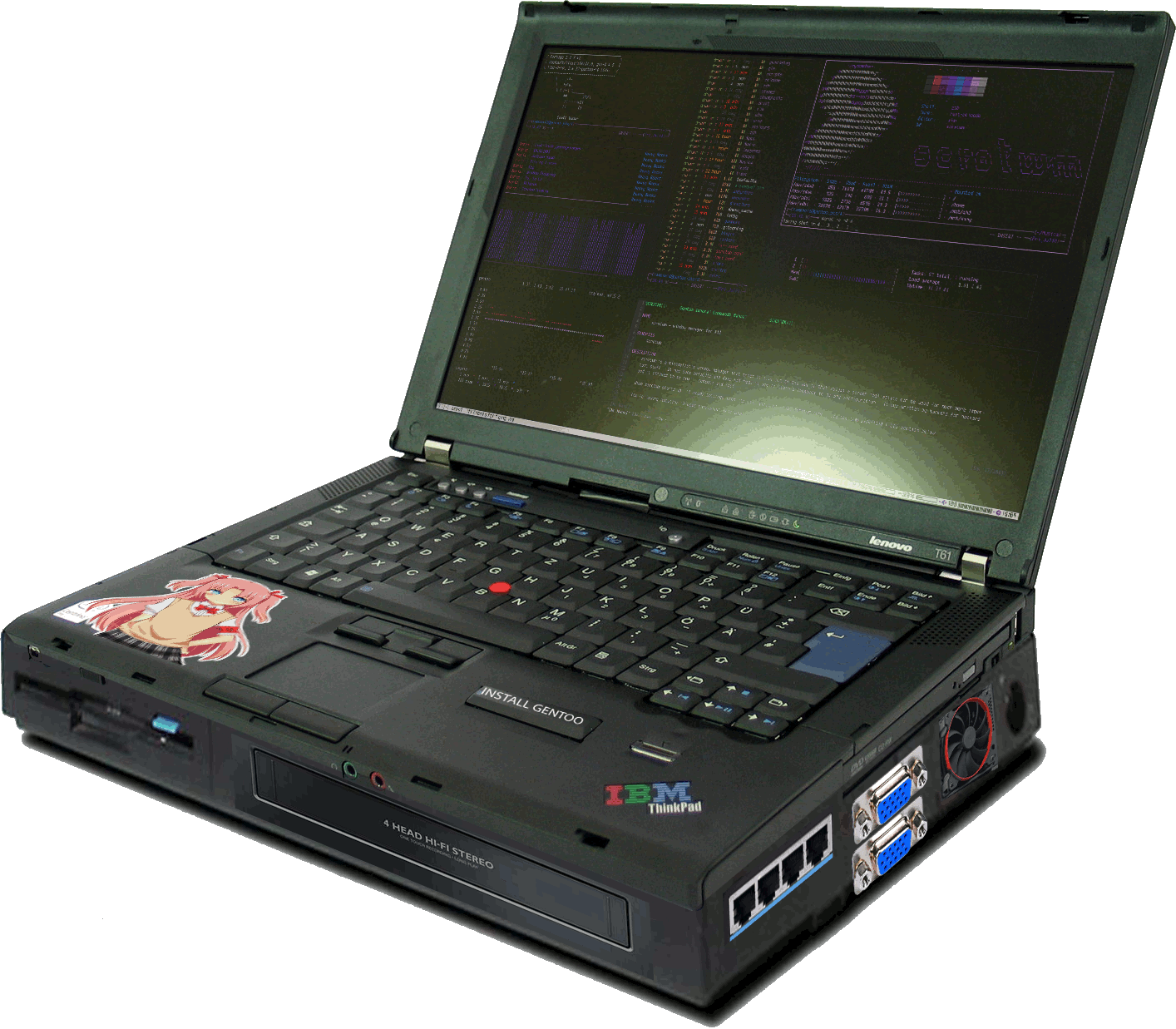The ideal ThiccPad

If there is a single point of advice I can offer novice computer users, it is
stop using modern computers.
If you look at "technology YouTube," by which I mean the massive multi-million
subscriber channels, nearly all of it is devoted to constantly reviewing and
comparing every new computer, processor, graphics card and product. There's big
money in it because obviously all of these companies put money in it, but also
if you're a normal person, you automatically assume you need the "best"
technology.
Do you need a modern computer?
Absolutely not. More than 95% of people could be using a computer from 2008 or
before without any problems. Needing a recent machine is limited to people who:
1. Do extreme, professional, processor-intensive video-rendering.
2. Compile massive programs and operating systems with severe time constraints.
3. Play recent triple AAA video-games on high settings.
4. Use many massive Electron apps and other inexcusably bad software
written by soydevs and other people who shouldn't be writing software.
The last two reasons aren't really real reasons at all because they are totally
unnecessary and avoidable things.
But to the point, watching YouTube videos and using a word processor does not
require last month's new release.
Every video I upload, I transcode for settings optimal for YouTube, meaning I
render each video I record. On my computer from a decade ago, that still takes
only a couple minutes. A fancy $5000 computer might be able to do it in less
than one, but it is honestly not worth the pain associated with modern
computers.
How much should a computer cost a normal person?
Either nothing or just around $200, I say. I use a ThinkPad X220 I got for $90
on eBay. Before that, I used another ThinkPad X220 I also got for $90. Like
anything else, if you are buying things on Amazon, you're doing it wrong.
The Pain of Modern Computers
Modern computers are more breakable
As computing has become more and more popular, companies have started to realize
that a consumer's first reaction on having their $5 wifi card die is
immediately buy a whole new computer. This means two things: (1) they don't
bother to make computers easy to repair, in fact, they make it more difficult
and (2) there is absolutely no need to make computers durable at all. In fact,
it's probably better to let computers break so you'll get yet another sale.
Apple is by far the most anti-social computing company because of this. I'll let
the larger tech channels show you the specifics, but every Apple product is
brilliantly designed to make it difficult to fix very basic and otherwise
fixable problems. They have quite a racket licensing out the ability and tools
to companies that want to fix their terrible hardware. Apple even used pentalobe
screws just so normal people couldn't open their computers up with a typical
screwdriver. Of course nowadays every other computer manufacturer imitates the
Apple style where apparent "sleekness" is supposed to be a signal of high
quality.
Modern computers are increasingly monitoring devices and come with proprietary
junk.
_____ _
|_ _| |__ ___
| | | '_ / _
| | | | | | __/
|_| |_| |_|___|
__ __ _
| / | __ _ _ __ __ _ __ _ ___ _ __ ___ ___ _ __ | |_
| |/| |/ _| '_ / _|/ _|/ _ '_ _ / _ '_ | __|
| | | | (_| | | | | (_| | (_| | __/ | | | | | __/ | | | |_
|_| |_|__,_|_| |_|__,_|__, |___|_| |_| |_|___|_| |_|__|
|___/
_____ _
| ____|_ __ __ _(_)_ __ ___
| _| | '_ / _| | '_ / _
| |___| | | | (_| | | | | | __/
|_____|_| |_|__, |_|_| |_|___|
|___/
You might've heard that all Intel i3/i5/i7 processors (that is, after the Intel
Core 2 Duo) have an onboard alternate processor that is meant to function as
spyware. This is called the Intel Management Engine. It can view your memory and
connect to the internet: basically all modern computers have this permanent
back door. In older computers, say the ThinkPad X200, you can, with a little
hardware action, remove the other processor and replace the proprietary BIOS
that is not possible on more modern computers (you can install Coreboot on a
more modern machine, but not all of the components of the Management Engine are
removed).
More recent computers, however are non-removable spyware by design and, yes, the
NSA can monitor any machine with a Management Engine. There are actually even
rumors that one of the taps that the FBI under the Obama administration put on
Trump during his campaign was a Management Engine bug.
Note that AMD (Ryzen) processors have what they call a "Platform Security
Processor" that is equivalent to the Intel Management Engine, so you're not
escaping the issue by using one of them.
_ ___ _____ ____ ___ _
| | / /_ _| _ _ _| /
| | | / / | || | | | | / _
| | | V / | || |_| | | / ___
|_| _| _/ |___|____/___/_/ _
Again, unless you play modern videos alone all day, you literally have no reason
to have a modern computer, especially one with an expensive graphics card.
NVIDIA is a great example because they make graphics cards and develop
proprietary drivers for them to make it harder and harder to use them on
machines that aren't running whatever the most recent spyware variant of Windows
10 is. Linux works perfectly on all computers ancient and modern, but if you
plug some NVIDIA thing up to it, you might lose your screen or not be able to
boot. A lot of gaymers whine about their NVIDIA products "not working" on Linux
without realizing that is by design. NVIDIA and other companies and all CPU
designers go out of their way to keep their source code and standards private
which makes their products tangibly worse because it is harder for other parties
to write drivers for them. Why? Because most of them have partnerships with
Microsoft.
The Problem of Windows
How many times have you heard a normie explain to you that their computer is
slow because it's "really old" and they bought it "way back in 2015?" It's an
absurd statement of course. Computers don't just get magically slow...
...unless they've been running Windows.
In the future, once even Microsoft has switched over to a purely Unix-based
backend for their operating system, we're all going to have a good laugh about
how Microsoft Windows, literally the worst and least functioning operating
system ever devised, was the largest consumer market share for decades.
I might go into how Windows is poorly designed in another page or video, but I
want to be clear that there is no such loss of speed on any Linux distribution,
which is what you should be using. I am one of the first to complain about the
feature bloat of the Linux kernel and Linux software, but compared to Windows,
it's no contest: Linux runs fast on old hardware. You'll know from some of
my videos, however, that I'm not big into "Linux Evangelism," mostly because
it's sort of strident and doesn't really work with a high success rate. Using
Linux is just something that normies have been immunized against (mostly because
"It's what smart people do"), but I always find myself in a position where
someone's Window installation has permanently crashed and they're at the awkward
decision of having to buy a license to reinstall the dysfunctional and slow
operating system they've grown to hate.
There is quite literally no problem that normal people have with computers that
is not immediately alleviated by installing Linux.
Why do people use ThinkPads?
As I said above, I use a X220 ThinkPad. Older ThinkPads are fairly popular among
people who think and care about doing things effectively and economically on a
computer. Why is this?
ThinkPads were always designed for enterprise environments, meaning the
financial incentives for the manufacturer are not always planned obsolesce, but
a long-standing reputation among large companies of having durable, fixable and
expandable machines.
To replace a hard drive on the X200 requires unscrewing just a single screw.
Same to replace the memory. To replace a spoiled keyboard is no more than three
screws. Modern laptops, including the degraded modern ThinkPad have abandoned
this simplicity and opt for the Apple-Mac/cell phone design technique of making
batteries, memory and the rest functionally soldered and irremovable.
How far can $500 go?
Over the years, I’ve had many things break on my laptops, but since I’ve been
using ThinkPads, it is incredibly easy to keep a working computer even after
rough use. I estimate that I have never spent more than a combined total of $500
on computers, which is usually a bare minimum for what someone can buy a
“modern” laptop for nowadays.
When the keyboard on my ThinkPad breaks, I can just buy a replacement keyboard
for $30 or $40 and replace the old one much easier than any other model. That’s
the modularity of these computers.
Even in the worst case scenario when something on the motherboard makes the
computer unbootable, I still get to keep my “broken” ThinkPad and repurpose the
memory, wifi card, keyboard and everything else. I still have some parts of
every laptop I’ve had just because they do come in a lot of use. The other
month, a friend’s wifi on his desktop went out and I could replace it with one
of my old ThinkPad modules.
This is the kind of thing you lose with modern computers. This is purposeful on
the part of manufacturers, and it’s important not to pay them huge amounts of
money to incentivize this behavior. It’s very easy to live off of 10 year old
computers nowadays. The eBay-and-etc resale market is massive even thought many
of us have gotten wise to the value of these old computers.